Camomila Studio
Gallery Library Auditorium Vivero Studio Seasons ES
  1. Home
  2. Gallery
  3. Nuts

Collection · Nuces

Nuts

What we keep for the winter: almonds, hazelnuts, walnuts, chestnuts, pine nuts… Each with its plant, its flower and the husk it comes from. Many are not nuts at all to a botanist, and here we tell what they really are.

Free, for personal use. More plates coming soon.
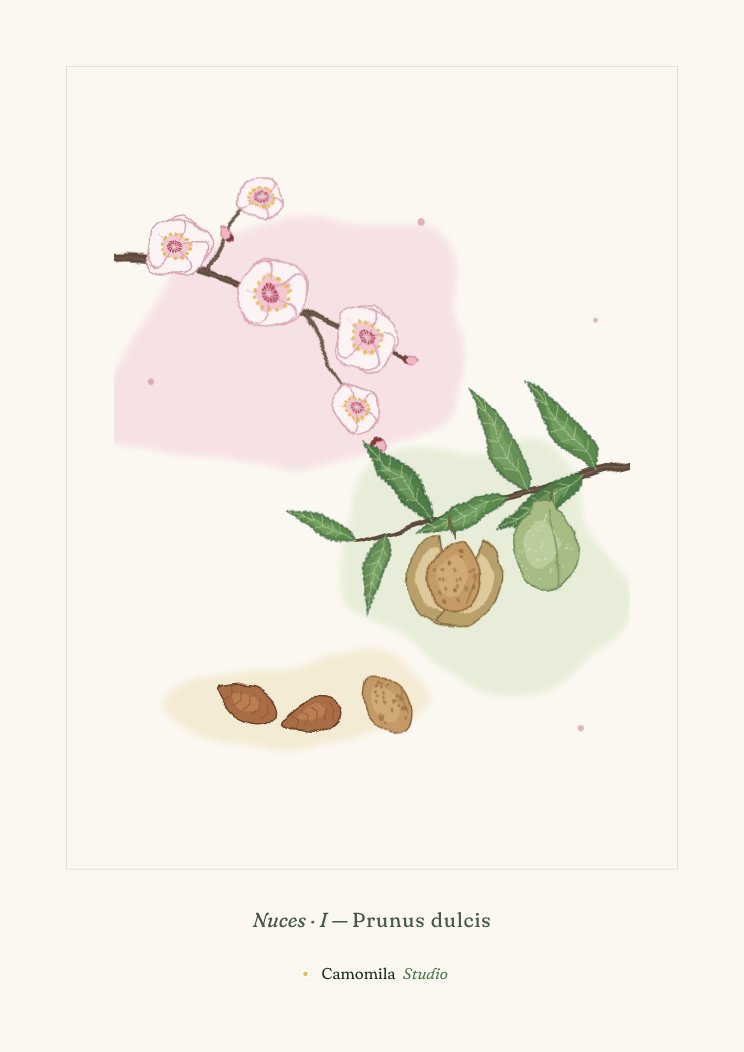
  • Plate I: A watercolour almond: above, a leafless branch with white, pink-centred flowers and a few buds; below, a branch with narrow leaves and two green almonds, one whole and one with its husk split open to show the stone; at the foot, two shelled almonds and a stone. Almond Plate I — Prunus dulcis
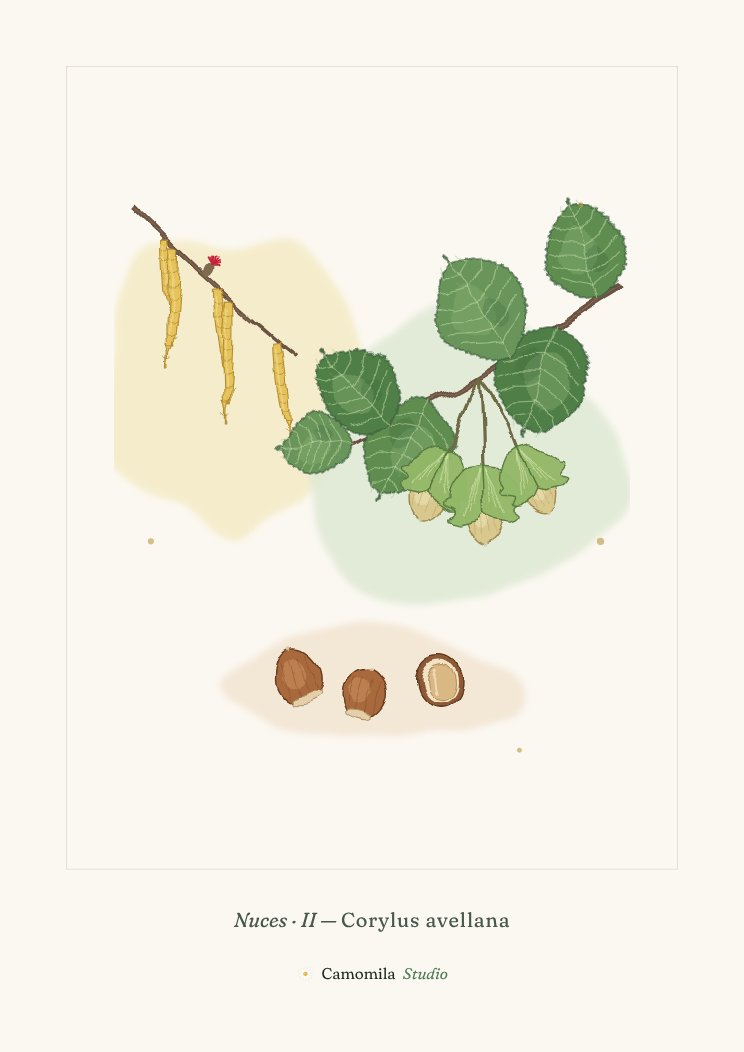
  • Plate II: A watercolour hazel: on the left, a leafless winter twig with yellow catkins hanging and a tiny red flower; on the right, a branch of rounded, toothed leaves and a cluster of three hazelnuts in their green, frilled husks; at the foot, two ripe hazelnuts and one cracked open. Hazel Plate II — Corylus avellana
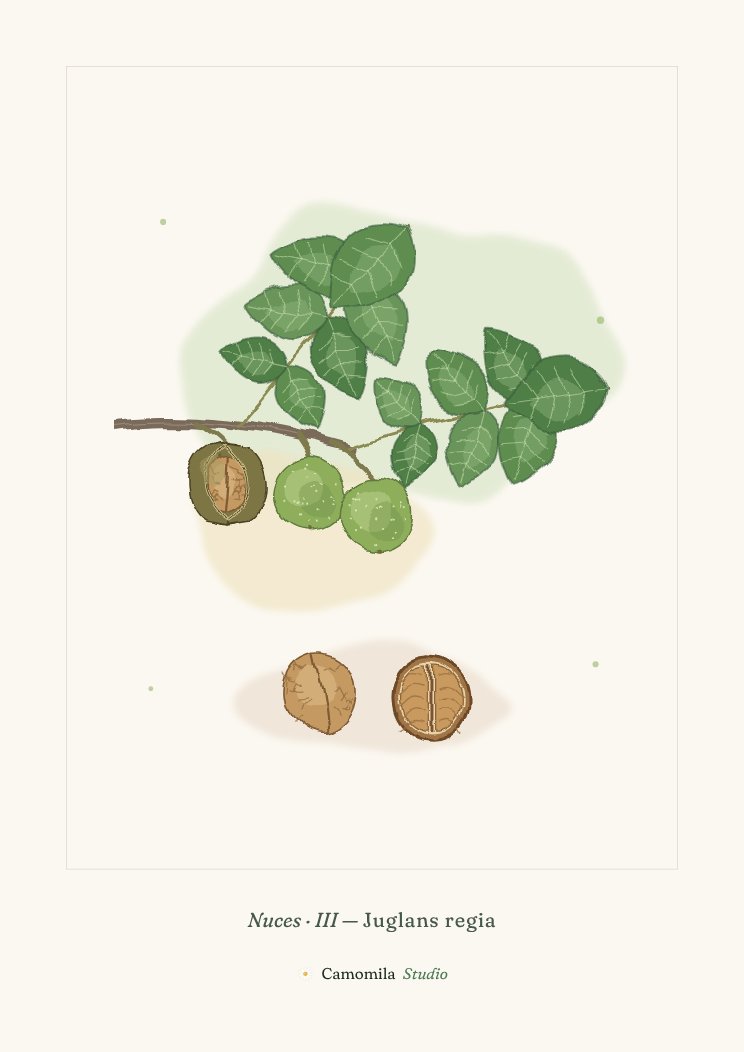
  • Plate III: A watercolour walnut: a branch with two compound leaves of smooth-edged leaflets and three walnuts, two green and round and one with its dry, split husk showing the shell; at the foot, a whole walnut and half a walnut opened to show the seed inside. Walnut Plate III — Juglans regia
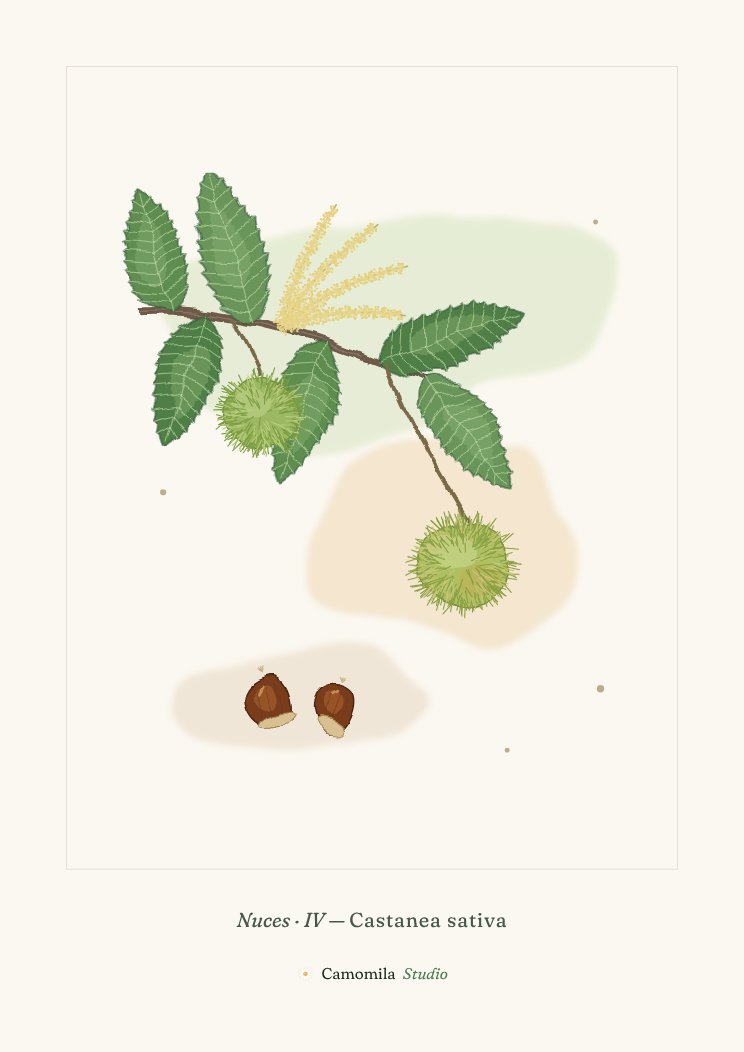
  • Plate IV: A watercolour sweet chestnut: a branch with long leaves edged with pointed teeth, two cream catkins, two closed burrs full of spines, one green and a larger one already turning yellow; at the foot, two loose chestnuts. Sweet chestnut Plate IV — Castanea sativa
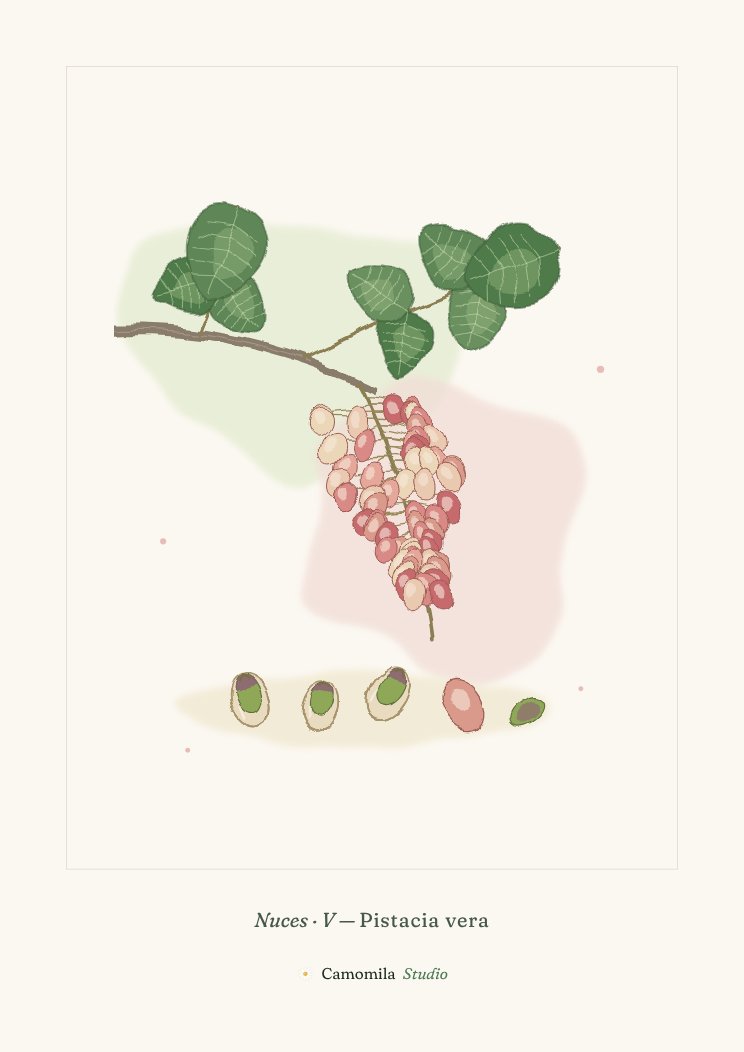
  • Plate V: A watercolour pistachio: a branch with compound leaves of broad, smooth leaflets and a hanging cluster of oval fruits packed like grapes, cream to pink and red; at the foot, three pistachios with split shells showing the green and purple seed, one still in its pink skin and a loose seed. Pistachio Plate V — Pistacia vera
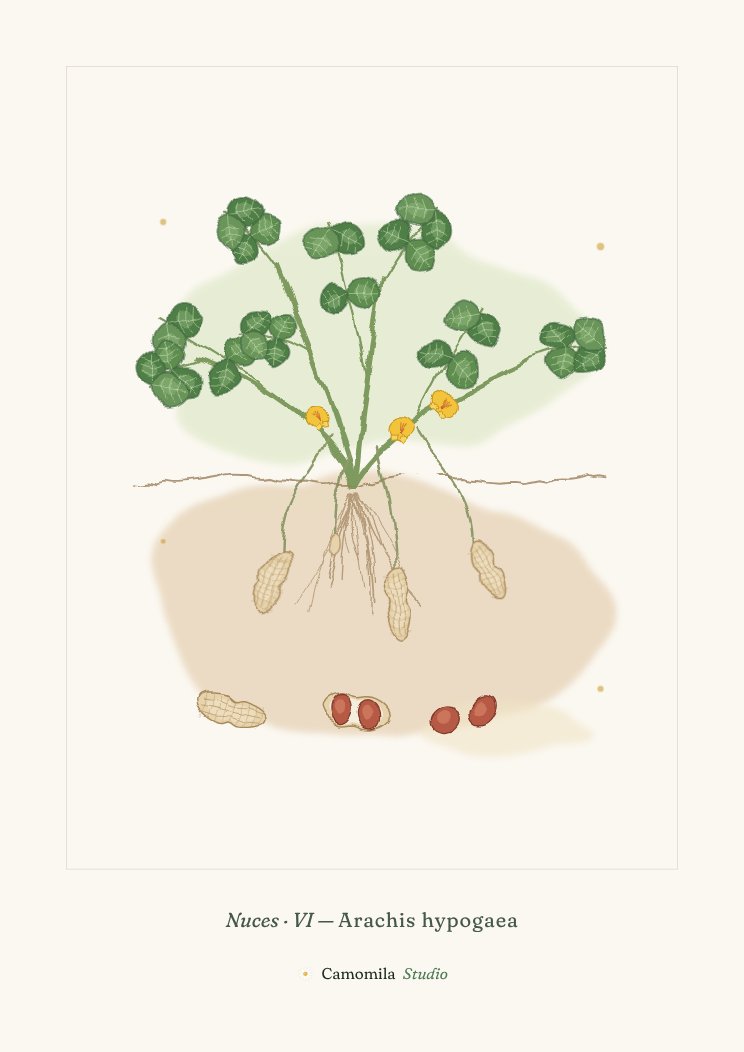
  • Plate VI: A watercolour peanut plant, cut away to show the soil: above, leaves of four leaflets and yellow flowers; from the flowers, thin stalks reach down and bury themselves, and below ground, among fine roots, pale pods with netted shells; at the foot, a whole pod, an open one with two red-skinned peanuts and two loose ones. Peanut Plate VI — Arachis hypogaea
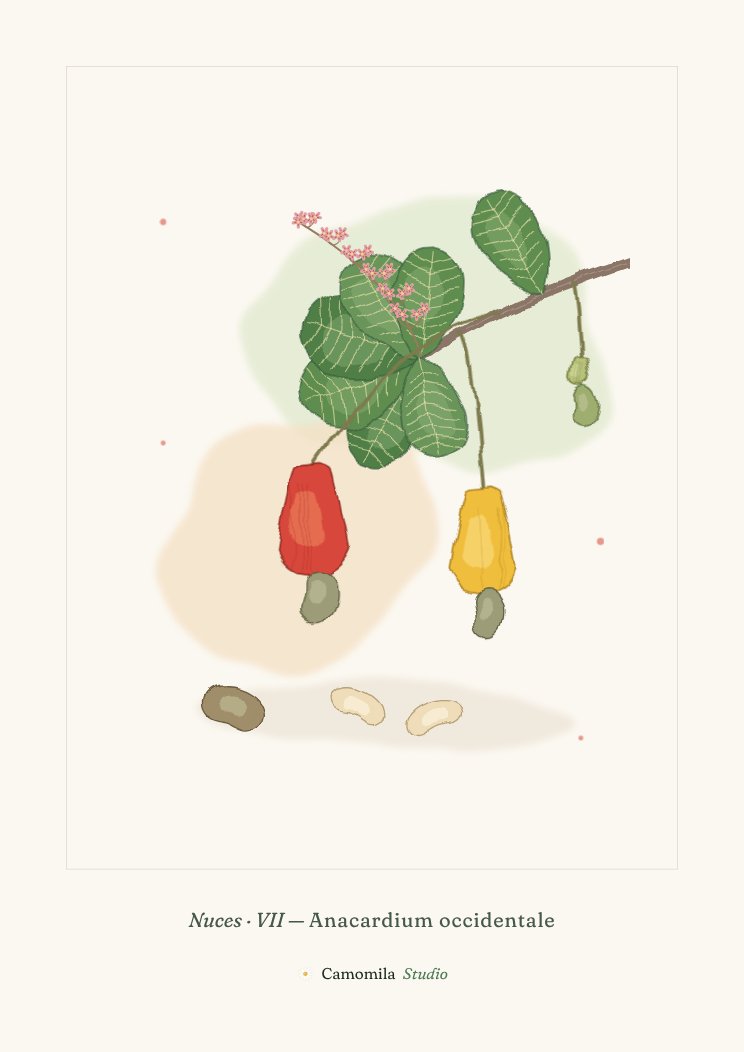
  • Plate VII: A watercolour cashew: a branch with large oval leaves with rounded tips, a panicle of small pink flowers and three fruits: two swollen pear-shaped stalks, one red and one yellow, with the kidney-shaped true fruit hanging below, and a young one with the kidney already formed and the pear still small; at the foot, a cashew in its shell and two curved cream seeds. Cashew Plate VII — Anacardium occidentale
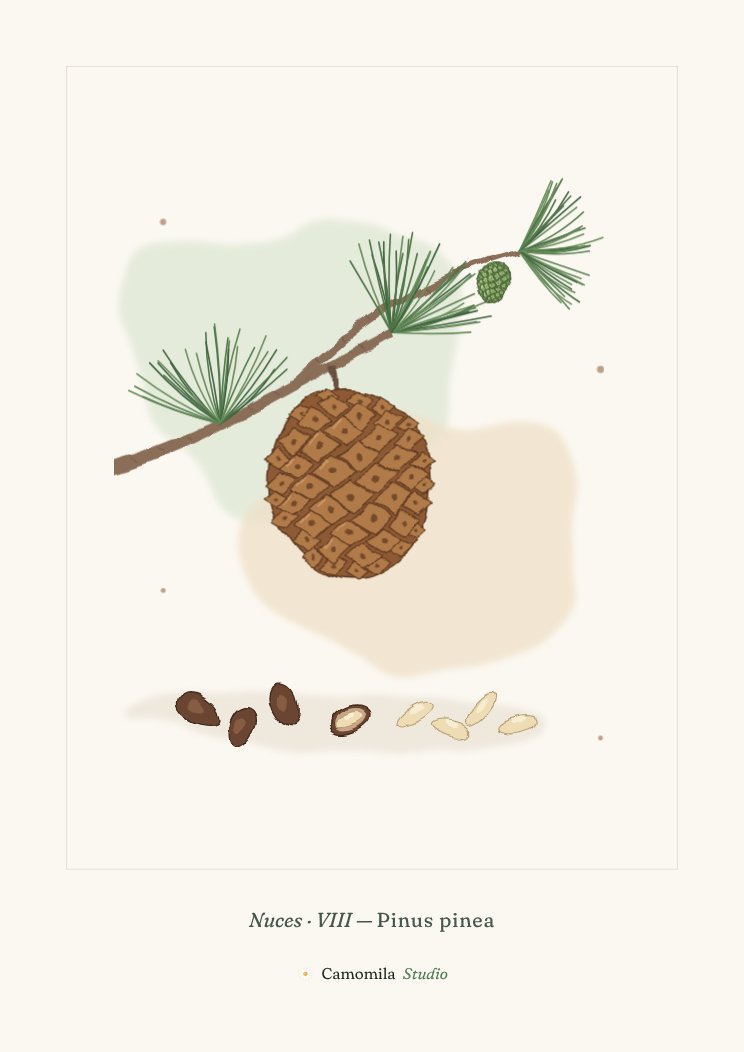
  • Plate VIII: A watercolour stone pine: the tip of a branch with tufts of long needles, a ripe cone, broad and round, with diamond-shaped scales, and a small green cone; at the foot, pine nuts in their hard shells, one cracked open, and shelled cream pine nuts. Stone pine Plate VIII — Pinus pinea

Other collections

  • Aromatic herbs
  • Autumn leaves
  • Mushrooms
  • Desserts
  • Houseplants
  • Christmas
  • Cacti and succulents
  • Flower garden
  • Berries
  • Citrus
  • Wildflowers
  • Miscellany
Camomila Studio · Made calmly in Spain
Privacy Contact RSS (in Spanish)