Autumn leaves · Plate IV
Horse chestnut
Aesculus hippocastanum
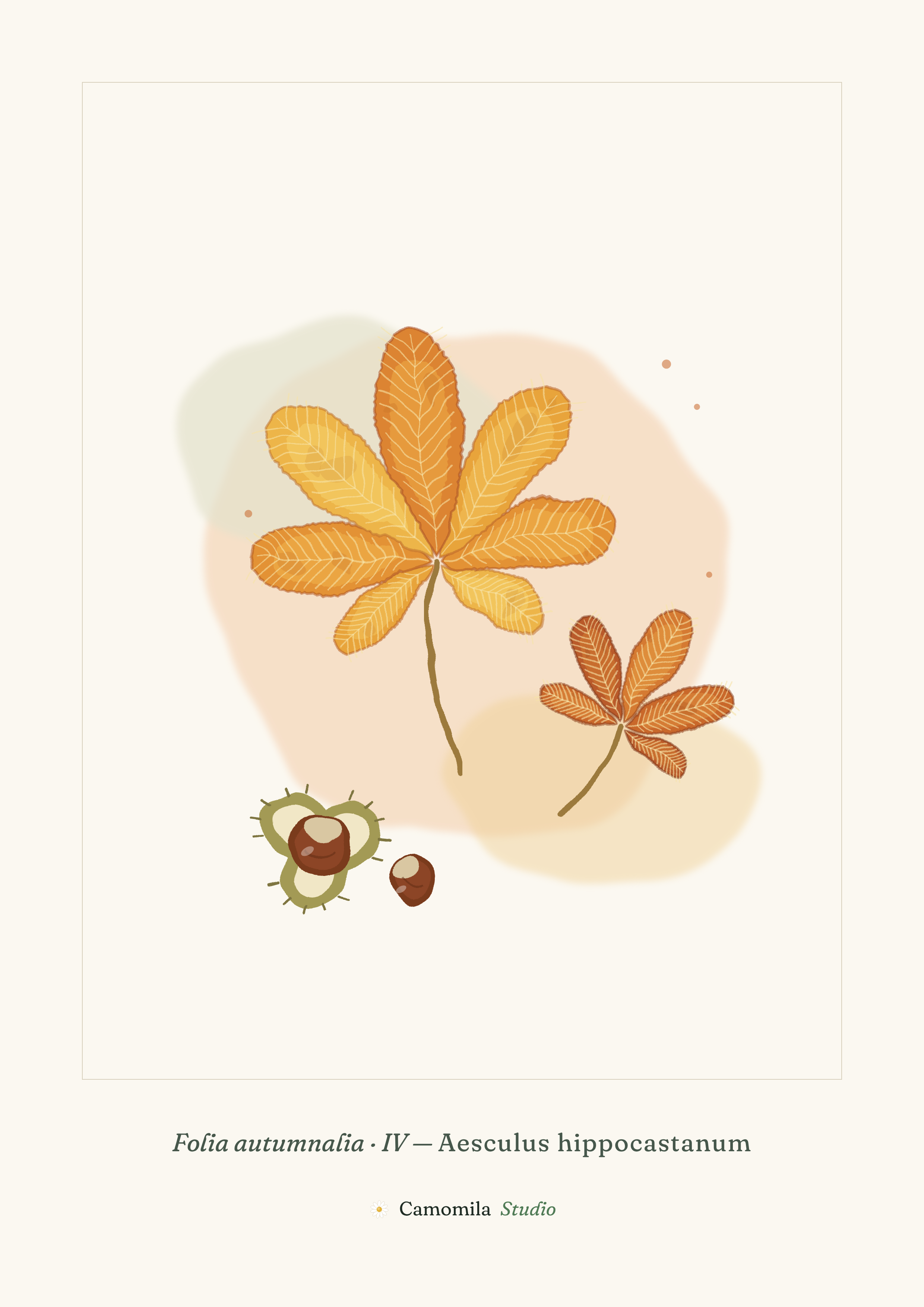
A compound leaf like an open hand: five to seven stalkless leaflets, broader towards the tip and double-toothed, on a long stalk. When it falls it leaves a horseshoe-shaped scar on the twig, complete with nails.
It comes from the Balkans, where it is now scarce in the wild, and has graced avenues and parks across much of Europe for centuries. Despite its name, it is not a close relative of the sweet chestnut.
In autumn it turns yellow and toasts to orange and rust; it often browns as early as summer because of a tiny moth that lives inside the leaf. Its short-spined husk holds one or more glossy mahogany seeds, the conkers, with a large pale patch. They are not edible.
Downloads
- To printA4 · PNG
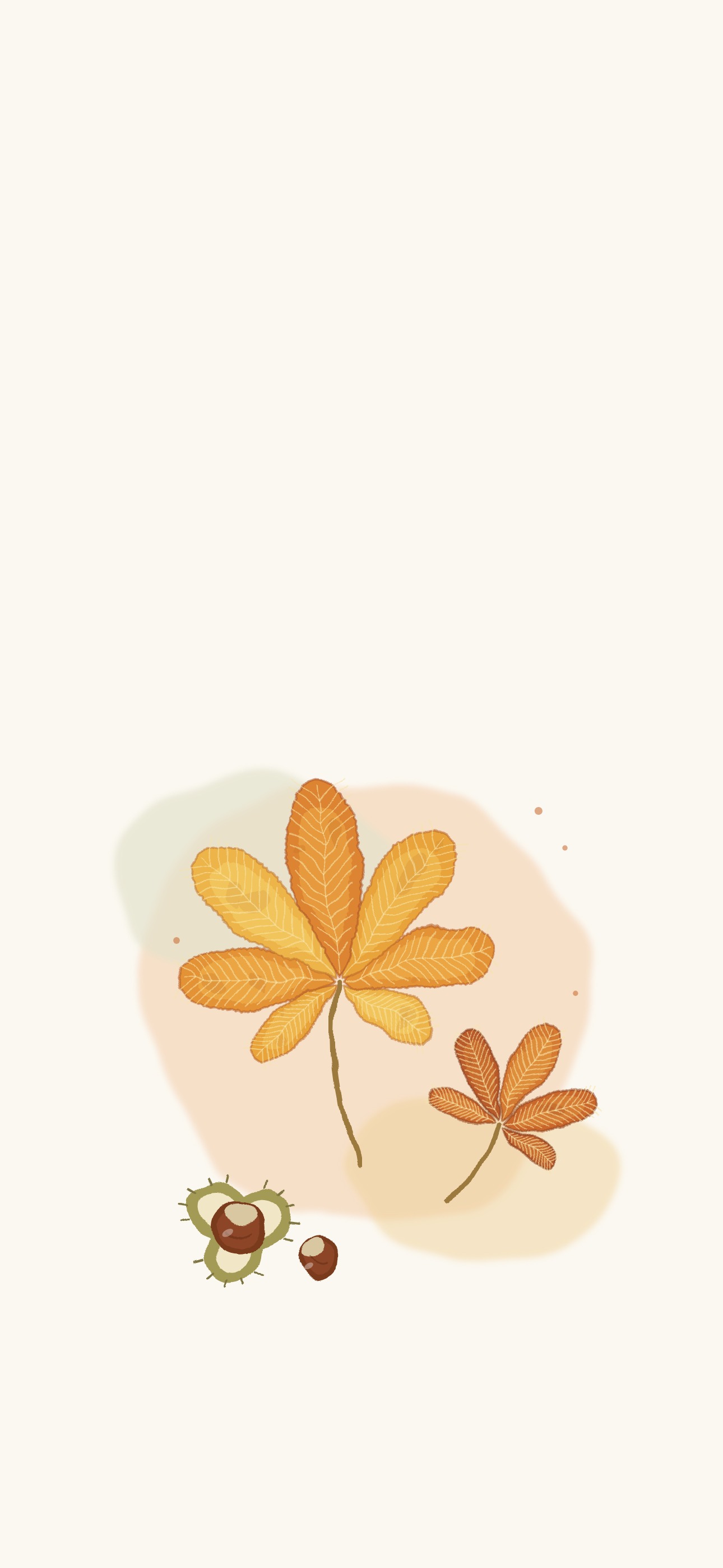
- Phone wallpaperJPG
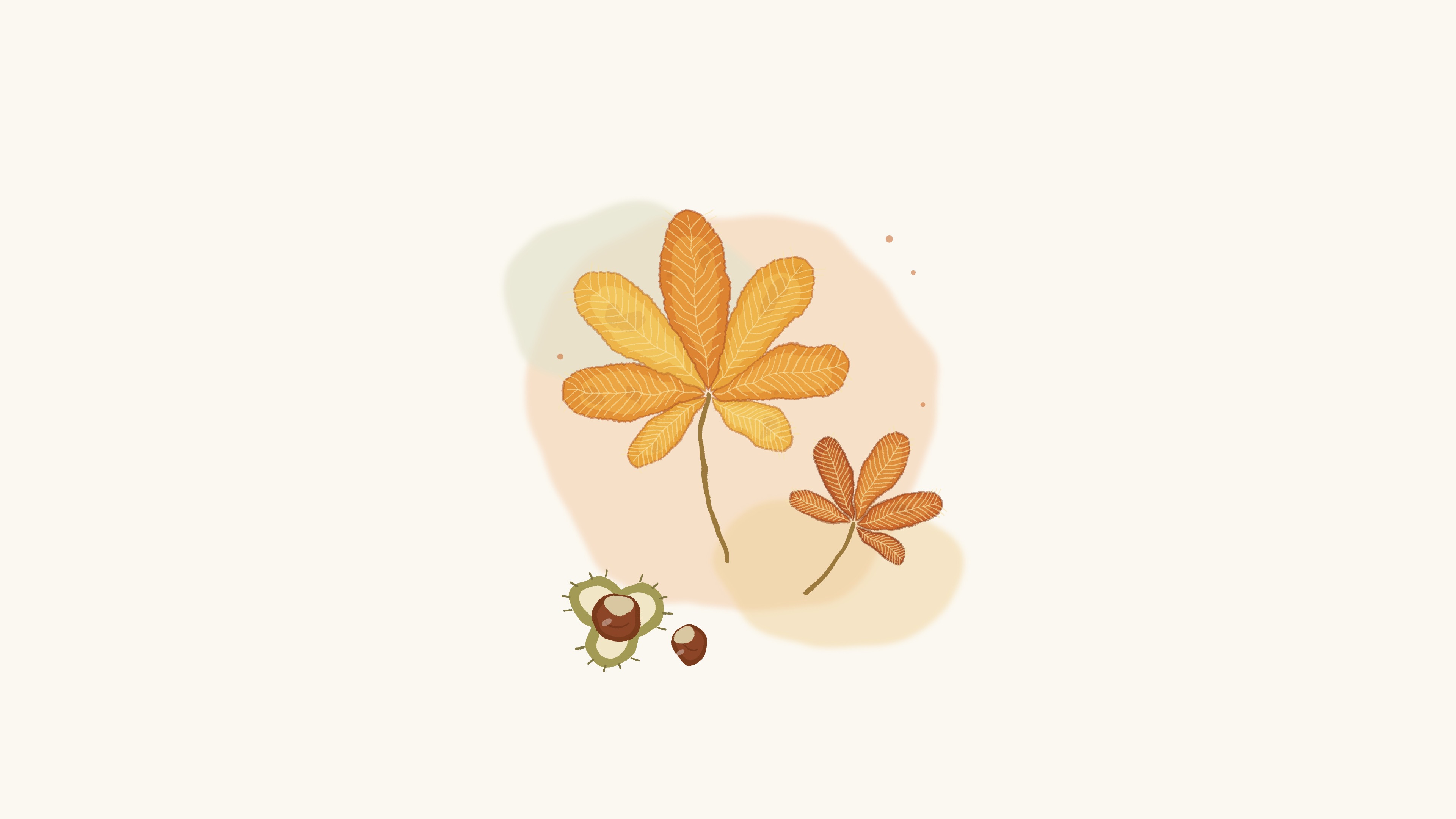
- Desktop wallpaper4K · JPG
Free, for personal use.